Our History
The story of Boerengroep since 1971
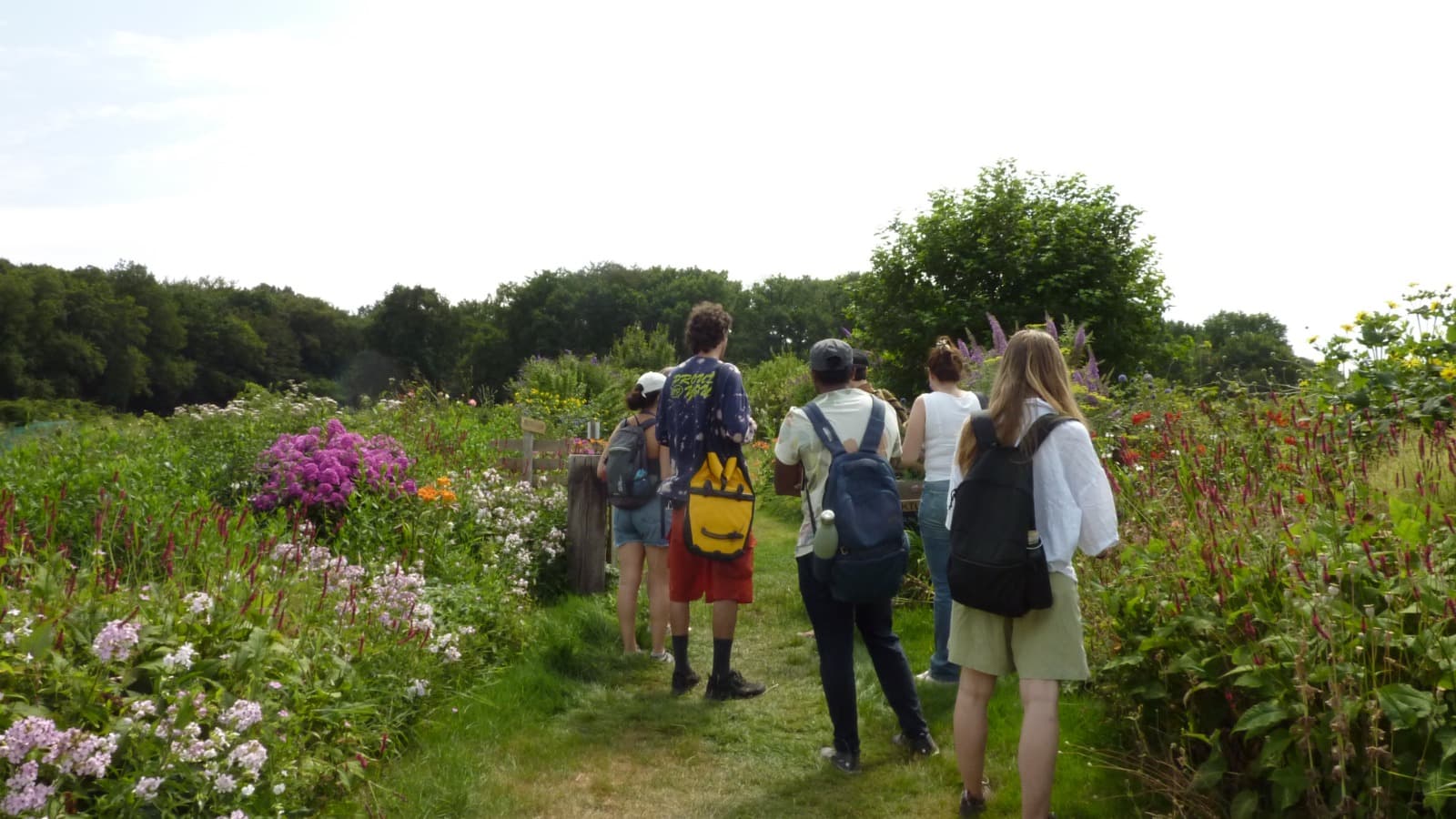
The Stichting Boerengroep journey began in 1971, in a context of massive farmers protests. At that time, Sicco Mansholt, former Dutch Minister of Agriculture and then President of the European Commission, was implementing a reform for the Common Agricultural Policy (CAP), aiming to modernize agriculture, in order to boost Dutch agriculture and make it more productive. Supporting the agricultural sector: a good idea, at first glance? But it meant to massively mechanise and specialise the farms, to promote and support only large-scale farms, at the expense of small-scale ones, and especially to halve the number of farmers. This reform led to one of the most violent demonstrations of the post-war period: on March 23, 1971, several thousands of farmers from all around Europe went to Brussels to protest against the Mansholt reform. At that time, Wageningen University was already a pioneer place for agricultural research and teaching. However, this reform and above all the farmers' protest, were barely discussed here. A group of Wageningen students decided to bring up this topic of discussion on their own at the university. For them, it was a clear sign that there was a huge gap between the theoretical knowledge taught at the university, and the concrete reality experienced by farmers, which led them to demonstrate in Brussels. That is why they created an association in which students were visiting farmers to understand the realities of farming, gain hands-on knowledge, and bring it back to the university, in order to bridge this gap. It was the beginning of Boerengroep.
Since its beginning, the activities of Boerengroep have been highly political. The students started fighting for a fair income for farmers, they clearly positioned themselves against the dominant agricultural paradigm, and for a social, just and sustainable food system. A few years after its creation, the association started with the Boerentoneel (Farmers’ Theater) to talk about farming life through theater to engage the audience in constructive dialogues. They also created course content to share knowledge on a farmers’ point of view, and joined the environmental movement when the awareness of the damage caused by industrialised agriculture emerged in the 70’s.
Through the years, Boerengroep has been taking position on different matters, such as defending outside graze husbandry, or advocating for farmers’ rights in countries such as Syria or Palestine. The organisation has also built a strong network on agroecology, and is working together with chairgroups at Wageningen University, such as the Rural Sociology Group (RSO) and Farming Systems Ecology (FSE), but also with other organisations like Cultivate, ASEED, Toekomstboeren, Otherwise and many others.
In 2016, a delegation from Boerengroep went to Cluj-Napoca, in Romania, to attend the Nyéléni Europe Forum for Food Sovereignty, where they got inspired by the notion of agroecology and the political movement that was taking shape around it. They came back with this knowledge and started organising Boerengroep’s activities around agroecology, to bring this topic in university as well. It was a turning point in the peasant foundation’s struggle. Nowadays, as agroecology is more and more reduced to its theoretical and technical aspect, Boerengroep tries to bring students to understand the social, political and practical aspects of the notion as well.
Thus, in practical terms, Boerengroep has been organising and participating in a large range of events to bridge the gap between the academic world and the farming world, to make research and teaching closer to the real farmer’s needs. Some meetings allow all year round to gather students to discuss and debate around a specific topic. Some excursions are regularly organised to bring the students to the farms and make them meet farmers. Boerengroep also has several peak moments, such as the festival Reclaim The Seeds Wageningen, organised for the first time in 2010 on food and seed sovereignty, and gathering activist organisations on that matter all around the Netherlands. Every summer since 2013, Boerengroep has been organising a capita selecta course on agroecology called the Farm Experience Internship, and aims to bring hands-on knowledge and farm experience to students, while making them feel empowered and aware on current agricultural issues and how to build a fair food system via agroecology. Hosting internships and theses is also a way for Boerengroep to bring all these topics to universities.
Stichting Boerengroep has celebrated its 50th anniversary in 2021. The history of Boerengroep is still being written by the current Boerengroepies, all the students and farmers that get involved in our events, and all the volunteers that help organising them.
Join our events and explore our website to discover how to be involved in our activities, and to help us work towards a just fair and sustainable food system!